


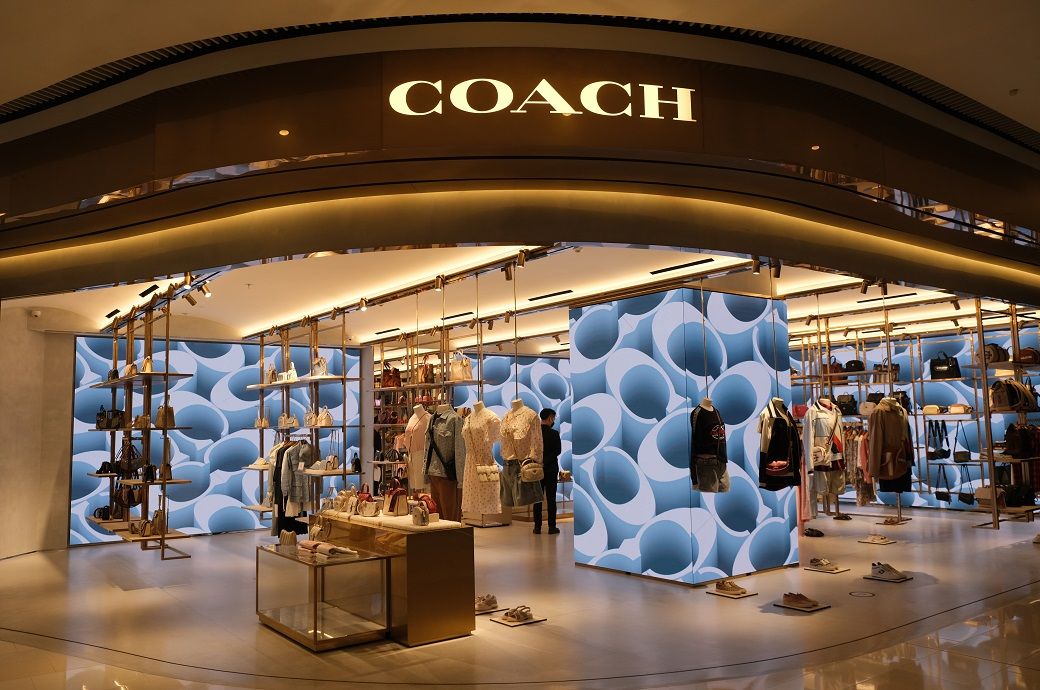
On a pro forma basis (excluding Stuart Weitzman), revenue rose 16 percent to $1.69 billion, led by a 22 percent gain in the Coach brand. North America led regional growth with 18 percent constant-currency growth, while Europe grew 32 percent and Greater China grew 19 percent.
Tapestry, Inc. reported record Q1 FY26 results, with revenue rising 13 percent to $1.7 billion and pro forma sales (excluding Stuart Weitzman) rising 16 percent to $1.69 billion, led by 22 percent growth in Coach. Non-GAAP EPS increased 35 percent to $1.38. Supported by strong cash flows, the company raised guidance for FY26 to $7.3 billion in revenue and $5.45-5.6 EPS.
Gross profit increased 15 percent to $1.3 billion, non-GAAP gross margin improved 120 basis points (bps) to 76.5 percent, supported by operating efficiencies and selling, general and administrative expense (SG&A) leverage. Tapestry Inc. said in a press release that GAAP operating income reached $328 million, while non-GAAP operating income was $354 million, which translated to margins of 19.3 percent and 20.9 percent, respectively.
GAAP diluted earnings per share (EPS) increased 61 percent to $1.28, and non-GAAP EPS increased 35 percent to $1.38. Net income on a non-GAAP basis reached $297 million, reflecting disciplined execution under Tapestry’s ‘Amplify’ strategy.
Brand-wise, Coach continued to be the standout performer with growth of 22 per cent (21 per cent in constant currency), supported by strong handbag sales and mid-teens growth in average unit retail (AUR). However, Kate Spade saw a decline of 8 percent (9 percent at constant currency). Direct-to-consumer (DTC) sales grew by 16 percent, with balanced growth across digital and physical channels. Tapestry gained more than 2.2 million new customers globally, of which approximately 35 percent were Gen Z consumers.
With a strong balance sheet and strong cash generation, Tapestry plans to return $1.3 billion to shareholders in FY26. This includes a quarterly dividend of $0.4 per share (annualized at $1.60) and an expanded share repurchase target of $800 million to $1 billion. The company repurchased $500 million worth of shares in Q1 at an average cost of $106 per share.
Cash and short-term investments totaled $743 million, with borrowings of $2.64 billion, resulting in a leverage ratio of 1.5x. Inventories remained steady at $1.02 billion. Operating cash flow stood at $113 million, while adjusted free cash flow improved to $103 million, supported by lower working capital and efficient cost management.
“Our outperformance in the first quarter marks a powerful start to our Amplify plan. With creativity, craftsmanship and disciplined execution, we exceeded expectations in terms of revenues and earnings. We are raising our full-year outlook with confidence in our structural advantages and our ability to deliver sustained growth and long-term shareholder value,” it said. Joan Crevoiseret, CEO of Tapestry,
Tapestry raised its FY26 revenue guidance to about $7.3 billion, which implies 4-5 percent year-over-year growth, or 7-8 percent on a pro forma basis. It now expects non-GAAP EPS to be between $5.45 and $5.6, representing growth of 7-10 percent. Operating margin expansion is estimated at around 50 bps, while adjusted free cash flow is estimated to reach $1.3 billion.
Fibre2Fashion News Desk (SG)


